
Fire and Explosion Origin-and-Cause Investigation for Building Systems
Origin-and-cause investigation, built on fire service and evidence discipline.
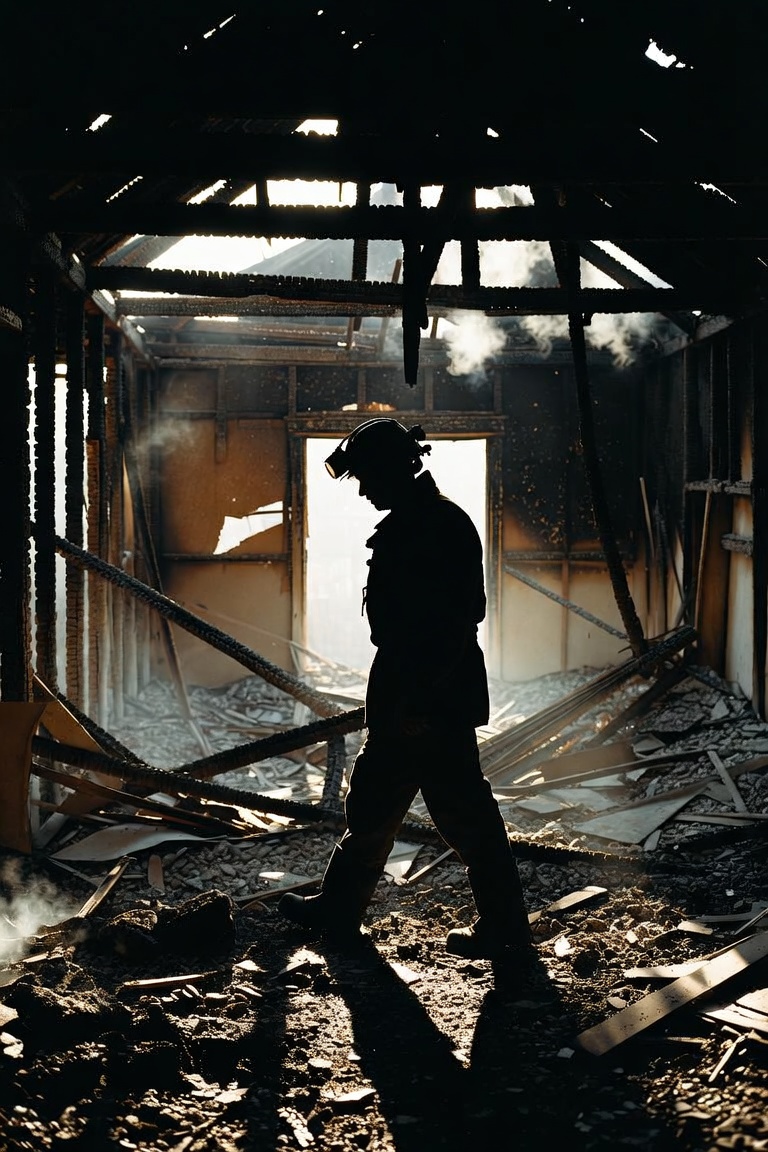 Scene Documentation
A scene is only preserved once.
Hazard Forensic Group investigates the origin and cause of fires and explosions rooted in building systems — water heaters, furnaces, electrical distribution, gas and carbon monoxide events, grow-room and extraction-lab electrical and HVAC, data-center and battery-room thermal events, and fire-protection system performance. The firm conducts scene work, evidence protocols, and NFPA 921/1033-based investigation, producing findings that stand up to a professional engineer's downstream failure analysis and to cross-examination. Hazard Forensic Group is retained by counsel and insurers who need the origin-and-cause work done right the first time.
Building-Systems Fire & Explosion Origin-and-Cause
Water heater fires and explosions
Furnace and HVAC system fires
Electrical distribution and panel-level fires
Gas leaks and carbon monoxide events
Cannabis grow-room and extraction-lab electrical and HVAC fires
Data-center and battery-room thermal events
Construction-defect fires
Fire-protection system performance — sprinkler, alarm, compartmentation, and egress
Why an Investigator With This Background
Most origin-and-cause reports identify a room and a point of origin, then stop. Hazard Forensic Group's approach is shaped by five things that don't usually show up together in one investigator.
Eight years reading fire behavior from the inside
Compartment dynamics, burn patterns, and fire spread are not textbook concepts here — they were read in real time, on real structures, as a working firefighter and Fire Instructor I. That distinction matters when a case turns on how a fire actually moved through a building.
HazMat Technician training applied to mechanical and electrical failure
Gas, refrigerant, and pressurized-system behavior is where a routine equipment fault turns into a fire or an explosion. HazMat Technician training makes that transition point familiar territory rather than a research exercise.
Fifteen years of law-enforcement evidence discipline
Chain of custody, spoliation awareness, joint-scene-examination protocol, and trained interview technique are where cases are actually won or lost — before an engineer ever opens a report.
Instructor-level ability to explain findings
Fire Instructor I certification means the work of translating a technical finding into something a jury can follow and remember is not a new skill being learned on the stand.
Technology-forward scene documentation
A software-and-operations background outside public safety shows up in the fieldwork itself — UAS aerial photo and video documentation, and clean digital demonstratives, used in service of the investigation rather than as a gimmick. Current UAS capability & limitations →
Justin Weller
Justin Weller founded Hazard Forensic Group LLC after more than two decades in public safety, spanning law enforcement, fire and EMS service, and military service. His background includes specialized investigative assignments, hazardous-materials response, fire suppression and instruction, and rescue disciplines — built on an evidence-handling and scene-documentation discipline developed over a long investigative career.
Full CV, training history, and case background are provided directly to retaining counsel and insurers upon inquiry.
Hazard Forensic Group LLC is an independent expert-witness and consulting practice. Fire origin-and-cause and life-safety findings are prepared to feed directly into a professional engineer's mechanical or electrical failure analysis where one is required.
Retain Hazard Forensic Group
For counsel, insurers, and risk managers evaluating a building-systems fire or explosion loss, Hazard Forensic Group is available for scene response, document and evidence review, and expert consultation. Reach out to discuss a case.